Inspire – High potential and gifted education
Some students learn faster and more easily than others. These students may shine in creativity, thinking, leadership or sport.
At our school, we recognise and nurture these strengths early. We support advanced learners with great lessons and activities to help them grow and thrive.
Why choose us for your high potential or gifted child?

Recognising potential and developing talent
Our teachers are skilled at seeing each student’s unique strengths and nurturing them so every learner can grow into the best version of themselves. They recognise high potential across all four HPGE domains, intellectual, creative, social-emotional and physical and provide targeted opportunities that stretch, challenge and inspire students to excel. By cultivating these diverse areas of talent, our teachers ensure that every learner is supported to thrive, achieve and realise their full capabilities.

Tailored lessons
Every student brings a unique set of skills, interests and abilities. In our multi-age classrooms, teachers use this diversity as an advantage, creating flexible learning pathways that allow students to learn at their own pace and from one another. By thoughtfully responding to each learner’s needs, our teachers provide appropriate challenges, enrichment and extension opportunities that keep learning exciting, engaging and meaningful. This personalised approach ensures that every student is supported to grow and succeed.

Rich opportunities and activities
Students are encouraged to explore and grow their talents through a wide range of rich learning experiences. From the creative arts and sporting programs to leadership roles, academic challenges and community initiatives, we offer opportunities that allow students to discover their strengths and pursue their passions. These experiences help build confidence, broaden skills and inspire students to step outside their comfort zones as they develop into well-rounded, capable learners.

Opening doors to wider experiences
Our students have access to a broad range of state-wide programs and initiatives designed to extend, challenge and enrich their potential. These opportunities expose learners to new ideas, expert mentors and authentic real-world experiences beyond the classroom. By participating in events, competitions, workshops and specialised programs, students broaden their horizons, deepen their skills and gain the confidence to pursue their interests at higher levels.
What is high potential and gifted education?
Inspire – High potential and gifted education (HPGE) is how our school supports students with advanced learning needs.
We do this through:
- effective teaching strategies like enrichment, extension and acceleration
- tailored support during lessons that stretch, challenge and inspire
- access to a wide range of opportunities both within and beyond our school.
Our high potential and gifted education opportunities
Our students engage with HPGE education in the classroom, in our school, and across NSW.
-
Differentiated tasks that adjust pace, complexity, and higher-order thinking.
Students move at different paces depending on readiness and ability, while higher-level learners use evidence-based evaluation and creative integration. -
Formative assessment to monitor growth and adapt learning.
In reading groups, the teacher uses quick conferences and exit slips to check comprehension. Based on this data, some students receive targeted strategy mini-lessons, while others move to more complex texts. -
Advanced learning pathways, including accelerated or compacted content.
A student demonstrating mastery of fractions completes a compacted unit and progresses to early-stage decimal operations, working with a small group on accelerated tasks while others consolidate core skills. -
Explicit teaching of critical thinking and problem-solving strategies.
During a science investigation, the teacher models how to question assumptions, interpret data, and evaluate evidence. Students then apply these strategies to design their own controlled experiments. -
Opportunities for abstraction, inquiry, and curriculum depth.
In mathematics, students explore algebraic patterns by creating generalised rules from number sequences, moving beyond the set curriculum through open inquiry. -
Tasks that promote choice, authenticity, and critical/creative thinking, including cross-curricular projects.
Students engage in a sustainable living project that integrates multiple learning areas. They apply skills from our outdoor garden, cooking lessons, and other subjects to design, plan, and implement real-world solutions, fostering creativity, problem-solving, and authentic learning experiences. -
Flexible grouping for collaborative ideation and presentation.
In our multi-age classrooms, students are grouped dynamically based on interests, skills, or learning goals rather than age. Younger and older students collaborate on projects, sharing ideas and mentoring one another, while groups are restructured for brainstorming, problem-solving, and presentations. This approach encourages peer learning, builds confidence, and allows every student to contribute their strengths in meaningful ways. -
Differentiated movement tasks and skill refinement in PDHPE.
In a throwing skills lesson, students rotate through stations offering varied difficulty levels, from basic technique practice to advanced accuracy challenges. -
Targeted learning goals.
Students track personal goals. The teacher provides personal feedback. -
Opportunities to take on lead roles in physical demonstrations or team strategy.
Students skilled in ball handling demonstrate a new drill, while strategic thinkers help design team plays during a modified sport game. -
Supportive learning environments that enable exploration and self-assessment.
At the end of a project, students complete self-reflection checklists and discuss strengths and next steps in one-on-one conferences with the teacher. -
Strengths-based feedback and goal setting.
A student receives feedback such as, “Your evidence is strong—next we’ll build your paragraph fluency.” Together they set a specific, achievable writing goal for the next unit. -
Opportunities for leadership within the classroom.
Students take turns as “learning leaders,” leading small-group problem-solving tasks. -
Structured peer collaboration and reflection.
After completing a design task, students use a peer-feedback protocol to offer constructive insights before final revisions. -
Safe learning environments that encourage confidence, risk-taking, and perseverance.
During a challenging maths investigation, the teacher normalises mistakes by celebrating “having a go.” Students share their thinking, even incorrect attempts, to build resilience and confidence.
- Debating
- Spelling Bees
- STEM and coding clubs
- Critical thinking workshops
- Visual arts and drama showcases
- Creative writing groups - Writers' Festival
- Sport - Hornsby Zone School Sports Winter and Summer competitions and Small Schools' Gala Days
- House competitions - Swimming, Cross Country and Athletics
- Performance-based movement groups - Dance
- Peer mentoring and Support - Reading and Cooking classes
- Student leadership, Student Voice Ambassadors
- Wellbeing programs - fun days. Mini fete, Teddy Bear picnic etc.
- Participation in whole-school inclusion and wellbeing initiatives - Life Skills GO!
- Participation in the Premier’s Spelling Bee, which promotes our students’ vocabulary development and attention to detail in competitive settings.
- Participation in the Premier’s Debating Challenge, which helps our students to build logical arguments and confidence in public speaking.
- Our STEM Enrichment Partnerships with Bricks4kids deepen our students’ intellectual curiosity while developing innovation and collaboration.
- The Premier’s Sporting Challenge (PSC) promotes whole-school participation in physical activity with leadership pathways and professional learning.
- The Representative School Sport (Hornsby Zone School Sport) and Small School events enable our students to trial and compete in sports at regional, state and national levels, fostering discipline, commitment and collaboration.
- Participation in dance ensembles helps develop our high potential and gifted dance students’ technical skills, performance presence and physical expressiveness.
- Student Wellbeing programs - Life Skill Go!

Peer mentoring through cooking
Older students mentor younger peers, developing leadership, creativity, and problem-solving while enriching learning for all
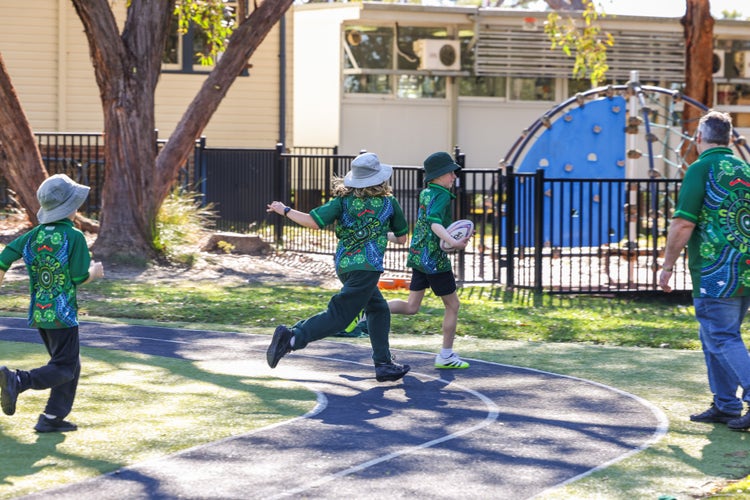
The Premier’s Sporting and Reading Challenge
Students are encouraged to stay active and develop a love of reading through this state wide initiative, tracking their progress in both sport and literacy while setting personal goals and celebrating achievement.

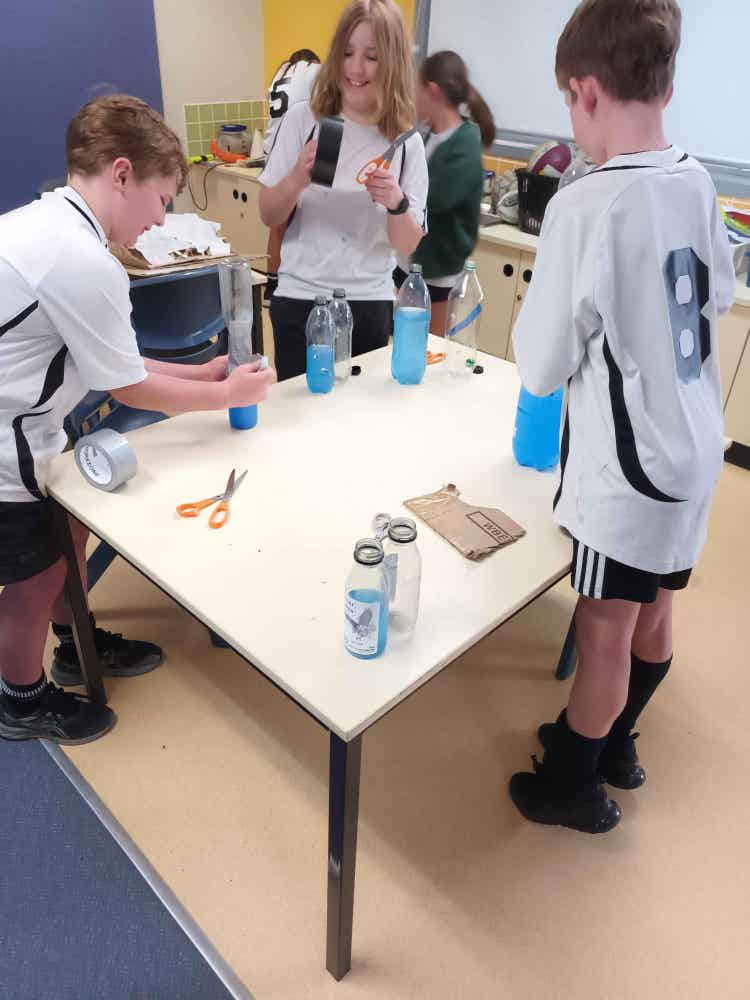
Cowan Public School lets students extend their skills through advanced STEM and coding challenges, fostering creativity, problem-solving and innovation.

Cowan Public School students develop their physical talents, teamwork and leadership skills, while engaging in challenging and rewarding sporting opportunities.

Cowan Public School supports students’ social and emotional growth, promoting resilience, empathy and collaboration in an inclusive environment where every learner’s strengths are valued.

AUSLAN Choir
Our AUSLAN Choir offers a unique extracurricular opportunity that blends music with sign language, fostering creativity, teamwork and inclusivity. Students gain valuable skills, deepen their understanding of the Deaf community and build confidence through performance. This dynamic activity promotes diversity, empathy and collaboration, making it a truly rewarding experience for all involved.
Help for your high potential child
If your child shows signs of high potential, contact us. We can share how our HPGE support can guide their learning journey.

Student opportunities and activities
Discover the opportunities our students have at our school.
Learning
Find out about our approach to learning and supporting students to progress.